Answer engine optimization is the practice of structuring your content so that AI-powered platforms like ChatGPT, Perplexity, and Google AI Overviews select it as the direct answer to a user's query. Unlike traditional SEO, which chases clicks and rankings, AEO focuses on becoming the cited source inside the answer itself. If you want your brand to show up in the responses these systems generate, you need a fundamentally different content strategy than what got you traffic five years ago.

How Answer Engine Optimization Differs from Traditional SEO
Traditional SEO optimizes for a ranked list of blue links. A user searches, sees ten results, and clicks the one that looks most relevant. Answer engine optimization skips that click entirely. The AI system reads your content, extracts the most relevant passage, and presents it as the answer. Your traffic model, your success metrics, and your content format all need to shift accordingly.
The query types are also fundamentally different. According to CXL's comprehensive AEO guide, answer engines prioritize conversational, long-tail queries in natural language rather than the keyword-centric one-to-three word searches that traditional SEO targets. A user doesn't type "best CRM software" into ChatGPT. They ask, "What CRM should a 10-person B2B sales team use if they're already on HubSpot?" That specificity changes everything about how you write.
Metrics shift too. In traditional SEO, you track organic sessions, bounce rate, and keyword rankings. In AEO, you track citation frequency across AI platforms, mention rate in AI-generated answers, and the quality of the context in which your brand appears. These are harder to measure but more indicative of actual authority in your space. A brand that gets cited in 40% of Perplexity answers about its category has a durable competitive advantage that a page-two ranking cannot replicate.
In practice, the two disciplines are not mutually exclusive. According to Typeface's AEO research, optimizing for AEO principles like clear headings, direct answers, and schema markup typically improves traditional SEO performance rather than hurting it. The content quality required for AI citation is simply higher than what most pages currently deliver. Raising that bar benefits you on both channels simultaneously.
Content Structure Strategies That Answer Engines Actually Reward
The single most impactful structural change you can make is leading every section with a direct answer. AI systems parse content looking for the most extractable, self-contained response to a query. If your answer is buried in paragraph four after three sentences of context-setting, the system will skip your page for one that leads with the point. Inverted pyramid structure, the same format journalists use, is the right model here.
Question-based headings are equally important. When you frame an H2 or H3 as a question that mirrors how a user would actually phrase their query, you create a direct signal for AI parsers. "What is the difference between AEO and SEO?" as a heading, followed immediately by a two-sentence answer, is a pattern that featured snippet algorithms and AI extraction systems both reward. This is not a coincidence. Both systems are solving the same problem: finding the most relevant answer to a specific question.
FAQ sections serve a dual purpose. They satisfy the structured data requirements that AI systems look for, and they also capture the long-tail conversational queries that answer engines prioritize. A well-built FAQ section with seven to ten specific questions, each answered in two to four sentences, can become the most-cited part of your entire article. According to Typeface's AEO research, content structured with question-based headings and direct answers performs better in both featured snippets and voice search results.
Mini tables of contents at the top of long-form content also help. They give AI systems a map of your content structure before they parse the full text. Combined with clear H2 and H3 hierarchies, they make your content architecture legible to both human readers and machine extraction systems. One approach that works well is treating every H2 section as a standalone answer unit: heading, direct answer, supporting detail, example. Each section should make sense even if the AI only reads that portion.
Schema Markup and Structured Data for AI Citation
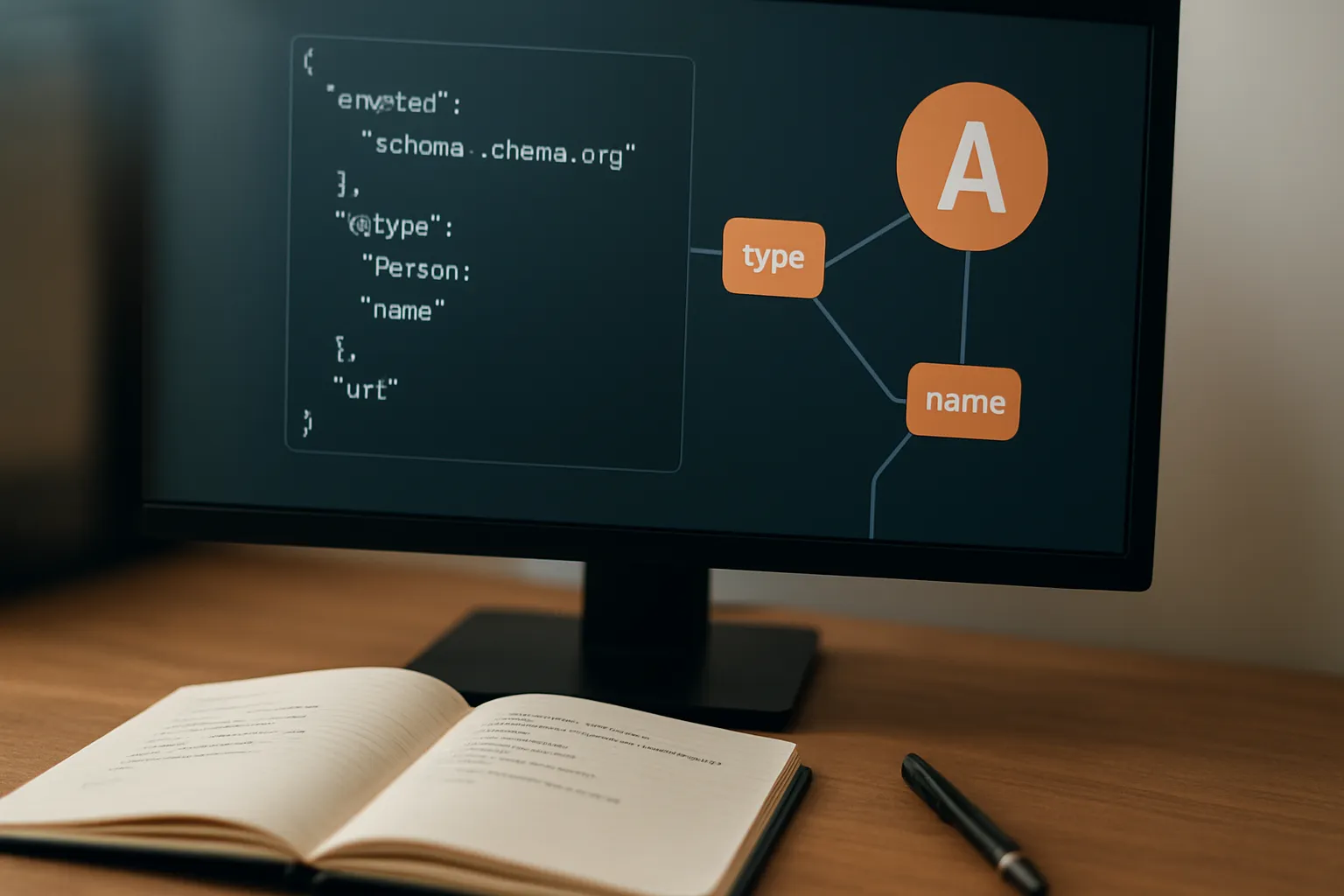
Schema markup is the technical layer that tells AI systems exactly what your content is and what it means. Without it, an AI has to infer context from your prose. With it, you're handing the system a labeled map. The most relevant schema types for AEO are FAQPage, HowTo, Article, and Product, all implemented in JSON-LD format. According to Semai's AEO tool documentation, AEO-optimized content uses these four schema types specifically to improve AI system extraction and citation rates.
FAQPage schema is the highest-priority implementation for most content sites. It explicitly marks up question-and-answer pairs in a format that Google's Knowledge Graph, ChatGPT's retrieval systems, and Perplexity's citation engine all understand natively. When you implement FAQPage schema correctly, your Q&A pairs become directly extractable data points rather than text that needs to be interpreted. The difference in citation frequency is measurable.
HowTo schema matters for procedural content. If you're explaining a process, a step-by-step guide with HowTo markup gives AI systems a structured sequence they can present directly in their answers. Google AI Overviews frequently pull HowTo-marked content for queries that start with "how do I" or "how to." The markup doesn't just help with extraction. It also signals to the AI that your content is authoritative and well-organized, which influences citation decisions.
Entity recognition and semantic HTML round out the technical picture. AI systems like Google's Knowledge Graph rely on structured data and schema markup to aggregate facts from trusted sources and present them as direct answers. Using semantic HTML elements correctly, marking up your author, your organization, your article's publication date, and your content's topic entity, builds the trust signals that AI systems use to decide whose content to cite. This is the infrastructure layer that most content teams skip entirely.
"Answer Engine Optimization focuses on becoming the source for direct answers in featured snippets, knowledge panels, and AI Overviews rather than driving clicks to your website. Websites in SaaS, e-commerce, content publishing, and professional services benefit most from AEO optimization strategies." (Source: Typeface AEO Research)
Schema Implementation Comparison by Content Type
| Content Type | Recommended Schema | Primary AI Benefit | Implementation Priority |
|---|---|---|---|
| Blog posts / guides | Article + FAQPage | Featured snippet and AI Overview citation | High |
| How-to tutorials | HowTo + Article | Step-by-step AI answer extraction | High |
| Product pages | Product + FAQPage | Knowledge panel and shopping AI answers | Medium-High |
| Service pages | Service + LocalBusiness | Local AI search and voice results | Medium |
| Landing pages | WebPage + FAQPage | Conversational query matching | Medium |

Building a Question-Focused Content Strategy for AI Platforms
The foundation of a strong AEO content strategy is a systematic map of the questions your target audience actually asks. Not the questions you assume they ask. Not the keywords your tool suggests. The real questions that surface in sales calls, support tickets, forum threads, and "People Also Ask" boxes. These are the queries that answer engines field every day, and the brands whose content answers them best get cited most often.
A common scenario is a SaaS company with a robust product but thin educational content. Their sales team fields the same fifteen questions every week. None of those questions have dedicated content pages. When a prospect asks ChatGPT one of those questions before a demo, the AI cites a competitor's blog post instead. The fix is straightforward: document those questions, build content pages around each one, structure them for AI extraction, and publish on a consistent schedule. Get Google, ChatGPT traffic on autopilot by turning your existing knowledge into systematically published, AI-ready content.
Long-tail, conversational queries deserve specific attention. A query like "what is the best project management tool for remote teams under 50 people" is far more likely to surface in an AI answer engine than in a traditional Google search. These queries are longer, more specific, and closer to a buying decision. Content that targets them directly, with a question-based heading and a direct answer in the opening sentence, captures intent at exactly the right moment in the decision process.
Generative Engine Optimization (GEO) extends this strategy by thinking about how AI systems generate answers, not just retrieve them. Where traditional AEO focuses on being retrieved and cited, GEO focuses on being the source that shapes the AI's generated response. This means writing content that is quotable, factual, and structured in ways that make it easy for a language model to paraphrase accurately. The two approaches are complementary, and the most effective content strategies combine both.
How to Measure AEO Success and Track AI Citations
Measuring answer engine optimization success requires a different toolkit than traditional SEO reporting. You cannot rely on Google Search Console alone. You need to actively monitor how AI platforms reference your content, track brand mention frequency in AI-generated answers, and correlate those mentions with downstream business outcomes like demo requests, trial signups, or direct traffic spikes.
Citation tracking across platforms is the core measurement activity. Run your target queries in ChatGPT, Perplexity, and Google AI Overviews regularly and document which sources get cited. Track whether your content appears, how it's framed, and what surrounding context the AI provides. This manual process is time-consuming but reveals which content pieces are performing and which need structural improvements. Tools that automate this monitoring are emerging, but even a simple spreadsheet tracking weekly citation checks gives you actionable data.
ROI from AI citations is harder to attribute than click-based traffic, but it's measurable with the right setup. When a prospect mentions they "heard about you from ChatGPT" or arrives via direct traffic after a period of increased AI citation, that's a signal worth capturing in your CRM. A content publishing platform in the professional services space, for example, might see a 20-30% increase in branded search volume within 90 days of a systematic AEO push, even before organic rankings move. Branded search is a reliable downstream proxy for AI citation activity.
Get Your Brand Mentioned by ChatGPT by publishing content that answers the specific questions your audience is already asking AI systems. The brands that get cited consistently are not the ones with the biggest budgets. They're the ones with the most systematically structured, question-focused content libraries.
Content Gap Analysis and Ongoing AEO Maintenance
Content gap analysis for AEO means identifying the questions your audience asks AI systems that your content does not currently answer. This is different from traditional keyword gap analysis. You're not looking for search volume. You're looking for question formats, conversational queries, and topic clusters where AI systems currently cite other sources instead of you. The gap is not a ranking gap. It's a citation gap.
The process starts with running your core topic queries across multiple AI platforms and documenting which sources appear. Then compare those sources against your own content library. Where they cover questions you don't, that's your gap list. Prioritize gaps based on query frequency and commercial relevance. A question that surfaces in 30% of your sales conversations but has no dedicated content page is a higher priority than an obscure technical query that rarely comes up.
Maintaining AEO-optimized content over time is a discipline most teams underestimate. AI systems update their training data and retrieval indexes regularly. A piece of content that earned citations six months ago may lose them if it becomes outdated or if a competitor publishes a more comprehensive answer. Quarterly content audits, checking for outdated statistics, missing schema, and structural improvements, are the minimum maintenance cadence for a serious AEO strategy.
This is where the combination of Generative Engine Optimization and AEO creates a compounding advantage. Rankfast automates both the research of question-based queries and the publication schedule, eliminating the manual work that most teams cannot sustain. Instead of running gap analysis once a quarter and publishing sporadically, you get a continuous cycle of question discovery, content creation, and scheduled publication that keeps your citation profile fresh across both traditional Google and AI answer engines. Rank on Perplexity, ChatGPT & Google AI Overviews without building a separate content operation to manage it.
Frequently Asked Questions About answer engine optimization
What is the difference between SEO and AEO?
Traditional SEO optimizes content to rank in a list of search results and drive clicks to your website. Answer engine optimization focuses on structuring content so that AI systems like ChatGPT, Perplexity, and Google AI Overviews select it as the direct answer to a user's query, often without requiring a click at all. The metrics, content formats, and success criteria are fundamentally different between the two approaches.
How do you optimize content for answer engines like ChatGPT and Perplexity?
Optimizing for AI answer engines requires question-based headings, direct answers in opening sentences, FAQPage and HowTo schema markup in JSON-LD format, and content structured around the conversational long-tail queries these platforms receive. Each section of your content should function as a self-contained answer unit that an AI can extract and cite without needing surrounding context.
What is schema markup and why does it matter for AEO?
Schema markup is structured data added to your HTML that explicitly tells AI systems what your content is and what it means. For answer engine optimization, FAQPage, HowTo, Article, and Product schema in JSON-LD format are the most important types. Without schema, AI systems must infer context from your prose. With it, your content becomes directly extractable data, which significantly improves citation frequency.
Can optimizing for AEO hurt my traditional SEO rankings?
No. According to Typeface's AEO research, optimizing for AEO principles like clear headings, direct answers, and well-structured content typically improves traditional SEO performance rather than hurting it. The content quality required for AI citation is higher than most pages currently deliver, and raising that quality bar benefits both channels simultaneously.
How do you measure success with answer engine optimization?
AEO success is measured by tracking citation frequency across AI platforms like ChatGPT, Perplexity, and Google AI Overviews, monitoring brand mention rates in AI-generated answers, and correlating those mentions with downstream signals like branded search volume increases, direct traffic spikes, and CRM-captured attribution from prospects who mention AI platforms as their discovery channel.
What are the best practices for creating AEO-optimized content?
The core best practices for answer engine optimization are: lead every section with a direct answer, use question-based H2 and H3 headings, implement FAQPage and HowTo schema in JSON-LD, build dedicated FAQ sections with seven to ten specific questions, target conversational long-tail queries rather than short keywords, and publish on a consistent schedule to maintain citation freshness across AI platforms.
Which content types perform best for answer engine optimization?
Educational guides, FAQ pages, how-to tutorials, and comparison articles perform best for AEO because they naturally match the question-based query formats that AI systems field. According to Typeface's AEO research, websites in SaaS, e-commerce, content publishing, and professional services benefit most from AEO optimization, particularly when their content addresses questions with educational, commercial, or transactional intent.
Summary
- Structure is the foundation: Content with question-based headings, direct opening answers, and FAQPage schema in JSON-LD format gets cited by AI answer engines significantly more often than unstructured prose, and these same improvements also lift traditional SEO performance.
- Measurement requires new tools: AEO success is tracked through citation frequency across ChatGPT, Perplexity, and Google AI Overviews, not just Google Search Console rankings. Branded search volume and direct traffic are reliable downstream proxies for AI citation activity.
- Consistency compounds the advantage: Combining Generative Engine Optimization with AEO and automating the publication schedule creates a continuous citation-building cycle that manual content operations cannot sustain at scale.
Conclusion
Answer engine optimization is not a future trend you can defer. AI-powered platforms are already the first stop for millions of queries that used to flow through Google, and the brands getting cited in those answers are building authority that compounds over time. The technical requirements, question-focused content strategy, schema implementation, and ongoing maintenance, are manageable if you approach them systematically. The brands that treat AEO as a core content discipline now, rather than an experiment, will hold citation positions that are genuinely difficult to displace. Start with your structure, implement your schema, close your content gaps, and publish consistently. The AI systems will follow.