AI visibility tracking is the discipline of measuring how often your brand, URLs, and content appear in AI-generated answers across platforms like Google AI Overviews, ChatGPT, Perplexity, and Gemini. As AI search now drives up to 25% of total search traffic for optimized brands in 2026, choosing the right tracking approach is no longer optional — it's a core growth strategy. The best AI visibility tracking solution depends on three factors: the platforms you need to monitor, how deeply you integrate tracking with content creation, and whether you want a hands-free workflow that publishes optimized content on autopilot.
What Is AI Visibility Tracking and Why It Matters in 2026
AI visibility tracking measures how frequently your brand and content are cited in AI-generated search results, including share of voice, citation counts, and brand mention sentiment across LLM platforms. Unlike traditional rank tracking, which monitors a URL's position on a search results page, AI visibility monitoring captures whether an AI system references your content when answering user prompts. This distinction is critical because a page can rank on page one of Google while being completely absent from ChatGPT or Perplexity responses.
The platforms that matter most for LLM visibility monitoring in 2026 include Google AI Overviews (100% coverage among top tools), ChatGPT (95%), Perplexity (90%), and Gemini (85%), according to Position Digital's 2026 tool comparison. Beyond these four, leading trackers also monitor Claude, Grok, Llama, DeepSeek, and Bing Chat. The broader your platform coverage, the more complete your picture of generative AI visibility across the search landscape.
Brands that ignore AI search visibility risk losing significant traffic without ever seeing a drop in traditional keyword rankings. When an AI system answers a question about your product category and omits your brand entirely, you lose a conversion opportunity that never shows up in standard analytics. This is why prompt intent volume scores — numerical estimates similar to keyword search volume — have become essential, with some platforms tracking keywords with up to 1,000,000 monthly intents to prioritize the most valuable AI topics.

Key Features to Compare in AI Visibility Tracking Tools
Citation tracking and brand mention monitoring are the two foundational features that separate capable AI SEO tracking tools from basic checkers. Citation trackers identify which URLs an AI system references when answering a prompt, giving you direct evidence of whether your content is being used as a source. Brand mention monitoring goes further by capturing sentiment — whether the AI describes your brand positively, neutrally, or negatively — and flagging mentions where competitors appear but your brand does not.
One of the most actionable features available in 2026 is the "No Cited" report, which identifies 100% of competitor mentions in tracked keywords where your brand is absent. This creates a prioritized content gap list: every prompt where a competitor is cited but you are not is a direct opportunity to create citation-worthy content. Tools that combine this with prompt intent volume scores let you rank those gaps by potential traffic impact, so your content team focuses on the highest-ROI opportunities first.
Structured data integration is another differentiator worth evaluating. Article schema and other structured markup increases content citability by making pages 30-50% more machine-readable for AI systems, according to published benchmarks. Tools that audit your pages for LLM bot indexation issues — checking whether AI crawlers can access and parse your content — add a layer of technical SEO that most standard rank trackers miss entirely. An AI Success Score that combines tracked mentions, sentiment, and citation data into a single benchmark metric simplifies reporting for teams managing multiple brands or clients.
AI Visibility Tracking: Comparison of Tool Approaches
| Approach / Tier | Platform Coverage | Key Strength | Content Integration | Best For |
|---|---|---|---|---|
| Free AI Visibility Checkers | 1-2 platforms (AI Overviews focus) | Quick spot-checks, zero cost | None | Beginners testing the concept |
| Standalone LLM Trackers | 4-6 platforms | Deep citation and share-of-voice data | Limited (export only) | SEO analysts needing raw data |
| Integrated GEO + Tracking Suites | 6-9 platforms | Tracking + content gap detection + optimization | Built-in content editor | In-house SEO teams |
| Automated Publish-and-Track Platforms | 8+ platforms | Hands-free keyword discovery, writing, and publishing | Fully automated GEO workflow | Agencies and growth-focused brands |
| Enterprise SEO + GEO Data Platforms | 8+ platforms with custom add-ons | SEO + GEO combined, traffic distribution reports | API-level integration | Enterprise marketing teams |
"Enterprises using integrated GEO content optimization gain 2x share-of-voice compared to brands relying on traditional SEO alone — a benchmark that underscores why tracking and content creation must work together." — 2026 GEO benchmarks
Get Google, ChatGPT traffic on autopilot with a platform that combines AI visibility data with automated content publishing, so every gap your tracker finds becomes a published, optimized article without manual effort.
How Competitor Benchmarking in AI Search Reveals Content Opportunities
Competitor benchmarking in AI search goes beyond comparing keyword rankings — it measures share of voice across AI-generated answers, showing exactly how often your competitors are cited versus your brand for the same set of prompts. Citation trackers reveal that top competitors often hold a 40% average share of voice for tracked keywords, meaning four out of ten AI answers in your category reference a competitor URL. Closing that gap requires knowing precisely which prompts drive those citations and what content format earns them.
AI ranking metrics and traffic distribution reports add quantitative depth to competitive analysis. When a tool shows that a competitor's ultimate guide earns citations across 60 tracked prompts while your equivalent page earns citations for only 12, the content brief writes itself: expand depth, add structured data, include original data or expert quotes, and publish media-rich assets like infographics. Tools that surface these gaps automatically — rather than requiring manual prompt-by-prompt audits — save analysts dozens of hours per month.
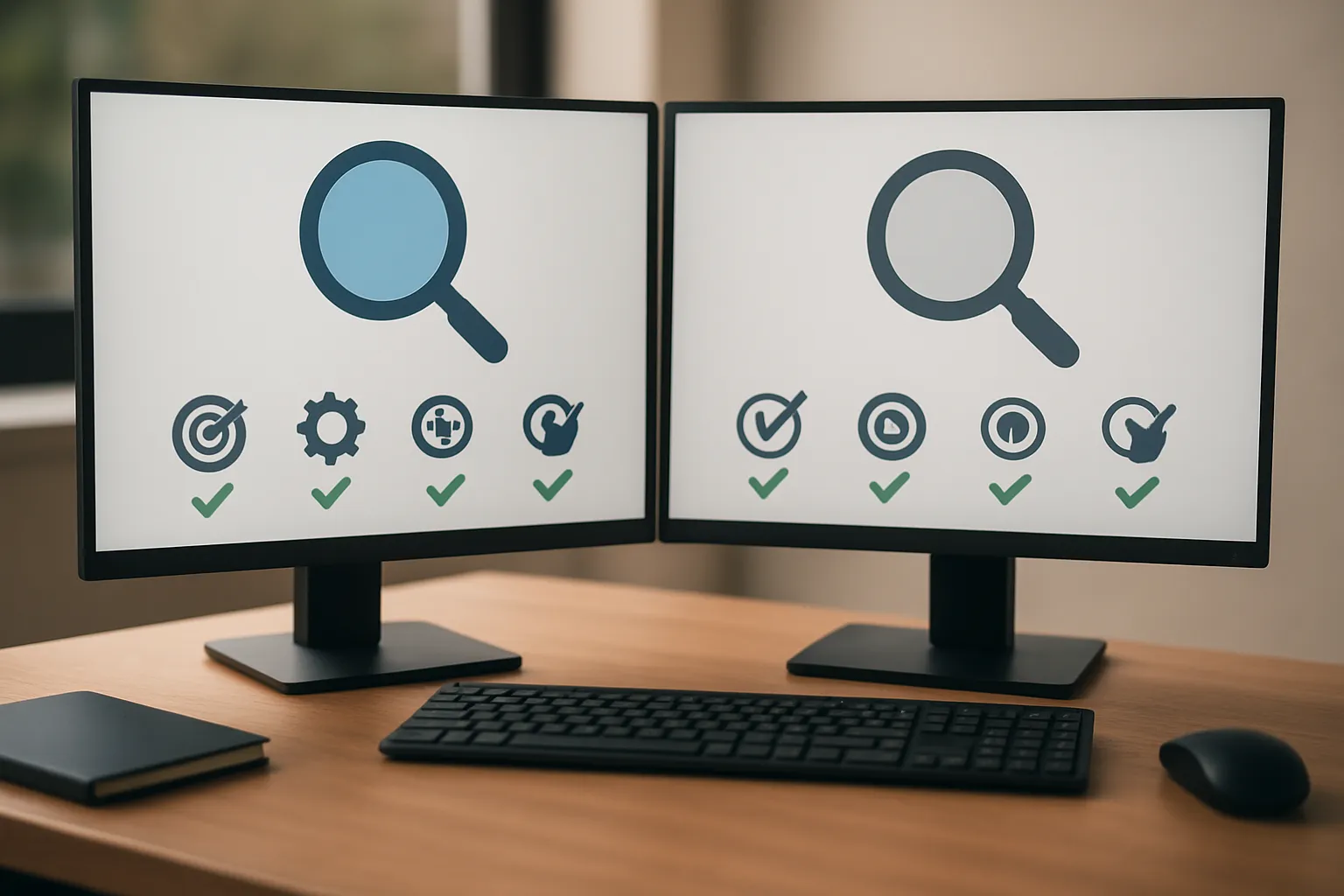
The ROI of competitive AI visibility benchmarking compounds over time. Brands that systematically close citation gaps in high-intent prompts report measurable lifts in both AI-referred traffic and direct conversions within 90 days, based on 2026 agency case studies. For agencies managing multiple clients, tools that provide white-label share-of-voice reports and automated gap alerts — rather than requiring manual exports — deliver the highest cost-to-value ratio. The key metric to track is not just whether you appear in AI answers, but whether your citation rate is growing faster than your competitors' across the prompts that matter most to your business.
Integrating AI Visibility Tracking with Automated GEO Content Workflows
The most significant competitive advantage in 2026 is not tracking AI visibility — it is acting on that data automatically. Platforms that combine LLM visibility monitoring with AI keyword research, GEO-optimized article generation, and scheduled publishing close the loop between insight and execution. Instead of exporting a list of content gaps and handing it to a writer, an automated workflow converts every tracked gap into a published, structured article within days. This is the hands-free AI visibility model that separates fast-growing brands from those still treating AI search as a manual SEO task.
Integrated platforms detect content gaps using visibility data, then generate articles optimized for both traditional search and AI citation. Prompt intent volume scores prioritize which gaps to fill first, ensuring the automated content calendar targets the 1,000,000+ monthly intent prompts before lower-volume opportunities. Direct optimization for GEO within the platform — rather than as a separate tool — means every published article includes the structured data, citation-friendly formatting, and semantic depth that AI systems require to reference it as a source.
Get Your Brand Mentioned by ChatGPT by connecting your AI visibility data to an automated publishing workflow that writes and schedules GEO-optimized articles on your behalf, so your brand appears in AI answers without requiring manual content production for every tracked gap.
The long-term performance advantage of automated GEO workflows is measurable. Brands using integrated tracking-and-publishing platforms consistently outperform those using standalone trackers because they publish content faster and at higher volume. Over a 12-month period, the compounding effect of closing citation gaps systematically — rather than reactively — produces a share-of-voice advantage that is difficult for competitors to replicate without similar automation. Rankability's 2026 analysis of AI search visibility tools confirms that content velocity is now as important as content quality for sustained AI citation rates.
Actionable Optimization Tips to Improve Your AI Search Visibility Score
Building citation-worthy content is the single highest-impact action you can take to improve your AI visibility score. AI systems prioritize comprehensive, authoritative resources — ultimate guides, original research, and structured how-to content — over thin pages optimized purely for traditional keyword density. Every piece of content you publish should answer a specific prompt completely, include real data or expert quotes, and use Article schema markup to make it 30-50% more machine-readable for AI crawlers.

Technical accessibility for LLM bots is equally important and frequently overlooked. Indexation audits that check whether AI crawlers can access your pages — not just Googlebot — reveal blocking issues that suppress citations even when your content is high quality. Common issues include robots.txt rules that block AI crawlers, JavaScript-heavy pages that LLMs cannot parse, and missing structured data that reduces machine readability. Fixing these technical barriers often produces faster citation improvements than creating new content.
- Publish ultimate guides and original data studies that AI systems cite as authoritative sources for high-intent prompts.
- Add Article, FAQ, and HowTo schema to all content targeting tracked prompts to increase machine readability by 30-50%.
- Audit LLM bot accessibility monthly to catch robots.txt, JavaScript rendering, or crawl budget issues that suppress citations.
- Use prompt intent volume scores to prioritize content creation toward the highest-traffic AI topics first.
- Include media-rich assets — infographics, comparison tables, and expert quotes — that increase the likelihood of AI systems referencing your page over a text-only competitor.
- Monitor sentiment alongside citation counts to ensure AI systems describe your brand accurately and positively when they do cite you.
Consistency of publishing is the final optimization lever. AI systems update their knowledge and citation patterns continuously, meaning a brand that publishes optimized content weekly maintains a higher citation rate than one that publishes in bursts. Automated scheduling — where your tracking data feeds directly into a content calendar that publishes on a fixed cadence — removes the human bottleneck that causes most brands to fall behind on AI search visibility. Nightwatch's 2026 guide to AI search monitoring tools highlights publishing consistency as a top predictor of long-term citation growth. Rank on Perplexity, ChatGPT & Google AI Overviews by combining consistent publishing with the structured, GEO-optimized content formats that AI systems prefer to cite.
Frequently Asked Questions About AI Visibility Tracking
What is AI visibility tracking?
AI visibility tracking is the process of measuring how often your brand, URLs, and content appear in AI-generated answers from platforms like Google AI Overviews, ChatGPT, Perplexity, and Gemini. It captures metrics like share of voice, citation counts, and brand mention sentiment that traditional rank trackers do not measure.
How do AI visibility tools work?
AI visibility tools submit tracked keywords as prompts to AI platforms, then analyze the responses to identify which brands and URLs are cited. They aggregate this data into share-of-voice reports, citation counts, and sentiment scores, updating continuously as AI systems change their responses. Some tools also audit your pages for LLM bot accessibility to ensure AI crawlers can index your content.
What is GEO in SEO?
GEO stands for Generative Engine Optimization — the practice of structuring and formatting content so that AI-powered search engines and LLMs cite it in generated answers. GEO complements traditional SEO by adding structured data, comprehensive topic coverage, and citation-friendly formatting that AI systems require to reference a page as a source. Eesel's 2026 GEO optimization guide provides a detailed breakdown of GEO best practices.
Which AI platforms should I track for brand visibility?
The highest-priority platforms to track are Google AI Overviews, ChatGPT, Perplexity, and Gemini, which together cover the majority of AI search traffic in 2026. For comprehensive AI visibility tracking, also monitor Claude, Grok, Bing Chat, and DeepSeek, particularly if your audience skews toward tech-savvy users who diversify across AI tools.
How do I improve visibility in Google AI Overviews?
Improving visibility in Google AI Overviews requires publishing comprehensive, structured content that directly answers high-intent prompts, adding Article and FAQ schema markup, and ensuring Googlebot can fully crawl and index your pages. Tracking your current citation rate in AI Overviews using a dedicated tool — then systematically closing gaps with optimized content — is the most reliable path to sustained visibility improvement. SE Ranking's 2026 AI visibility tools review outlines specific features that support AI Overviews optimization.
Summary
- AI visibility tracking measures brand citations across 8+ AI platforms, including Google AI Overviews, ChatGPT, Perplexity, and Gemini, using share-of-voice, citation counts, and sentiment data that traditional rank trackers do not capture.
- The highest-ROI approach combines tracking with automated GEO content workflows — converting citation gaps identified by your tracker into published, structured articles on a consistent schedule, rather than treating tracking and content creation as separate manual processes.
- Structured data, LLM bot accessibility audits, and prompt intent volume prioritization are the three technical levers that produce the fastest improvements in AI citation rates, with Article schema alone increasing machine readability by 30-50%.
Conclusion
The brands that win in AI search in 2026 are those that treat AI visibility tracking not as a reporting exercise but as the engine of an automated content strategy. By connecting citation gap data to GEO-optimized article generation and scheduled publishing, you create a compounding advantage: every tracked gap becomes a published asset, every published asset increases your citation rate, and every citation improvement drives measurable traffic and conversion growth. The tools and workflows to do this hands-free exist today — the only question is how quickly you deploy them before your competitors close the same gaps you are currently ignoring.