Choosing the right approach to a search engine optimization content strategy in 2026 comes down to three factors: how much manual work you want to do, whether your tool covers AI search visibility alongside Google, and what you actually pay per published article. The market now offers everything from single-purpose writing assistants to fully automated pipelines that find keywords, generate GEO-optimized articles, and schedule publication without you touching a keyboard. This guide breaks down the leading AI SEO tools, compares them honestly, and tells you which approach fits which type of business. Get Google, ChatGPT traffic on autopilot and skip the manual grind entirely.
What Makes an AI SEO Content Tool Worth Paying For in 2026
The baseline expectation for any paid AI content tool has shifted significantly. Two years ago, generating a readable draft was enough. Today, buyers expect keyword research, heading structure, internal linking suggestions, and some form of GEO optimization baked into the same workflow. Tools that only write text without connecting that output to ranking data are losing ground fast. The question is not whether a tool uses AI, but whether it closes the loop from topic discovery to published, indexed content.
Three capabilities separate genuinely useful tools from expensive word processors. First, real-time data integration: the tool should pull live search data, not rely on static training knowledge from 18 months ago. Second, GEO support: with AI platforms like ChatGPT and Perplexity now answering queries directly, your content needs to be structured for extraction, not just keyword density. Third, automation depth: the best tools reduce the number of decisions you make per article, not just the time spent writing each sentence.
Pricing also tells a story. According to Semrush's 2026 AI content marketing tools analysis, ChatGPT Plus sits at $20/month, making it the lowest barrier entry point, while dedicated SEO content platforms range from $39 to $200/month depending on automation depth. The gap between those price points reflects a genuine difference in what gets automated. Paying $20/month means you are still doing most of the strategic work yourself. Paying $60 to $100/month means the tool handles the research layer too.
For teams publishing at scale, the per-article cost matters more than the monthly fee. A platform charging $99/month that produces 100 publish-ready posts costs $0.99 per article. An agency charging $400 to $600/month for the same volume is a fundamentally different economic proposition. Before evaluating any tool, calculate your target output volume and divide the monthly cost by that number. That single metric cuts through most of the marketing noise.

Semrush Content Toolkit and Surfer SEO: A Search Engine Optimization Workhorses
The Semrush Content Toolkit represents the enterprise end of AI-assisted SEO writing. According to Semrush (2026), the toolkit costs $60/month for organizations publishing search engine-optimized content, with an additional 10 SEO-boosted articles available for $30/month. What you get for that price is a tightly integrated brief-to-draft workflow: the tool generates SEO briefs based on top-ranking competitor content, suggests semantic terms to include, and scores your draft against ranking signals in real time. For content managers who already understand SEO but want to move faster, this is a strong fit.
Surfer SEO takes a different technical approach. Rather than generating full drafts, Surfer uses machine learning and real-time Google analysis to prescribe exactly what your content needs to rank: word count, heading count, specific NLP terms, and topical coverage gaps. According to eesel.ai's 2026 content generator review, Surfer's strength is topical authority building, where consistent use of its content editor across a cluster of related articles compounds ranking gains over time. It is less a writing tool and more a ranking prescription system.
When to Use a Search Engine Optimization Data Tools vs. Writing Assistants
The practical distinction matters for budget allocation. Data-heavy tools like Semrush and Surfer are most valuable when you already have writers or can generate drafts quickly. They tell you what to write and how to structure it, but they do not eliminate the writing step. If your bottleneck is ideation and research, they solve it. If your bottleneck is production volume, you need a tool that also generates the content, not just the brief.
In practice, many mid-size content teams use both: Surfer for optimization scoring and a separate AI writer for draft generation. That combination works but adds cost and coordination overhead. The more efficient path, especially for lean teams, is a single platform that handles research, writing, and optimization in one workflow. The tools covered in the next sections move closer to that integrated model.
Writesonic and Jasper: Step-by-Step AI Content Workflows
Writesonic has built one of the more complete SEO article workflows available at its price point. According to Search Influence (2026), the Starter plan begins at $39/month billed annually, with Lite tiers around $49/month. The workflow guides you through keyword selection, heading structure, and draft generation, then layers in GEO optimization for AI search visibility. That last feature is increasingly rare at this price: most tools at the $39 to $49 range focus exclusively on Google and ignore the growing share of queries being answered by ChatGPT, Perplexity, and Google's AI Overviews.
Jasper targets a different buyer profile. With Pro starting at $59/month per seat billed yearly (Eesel.ai, 2026), Jasper is positioned for marketing teams that need consistent brand voice across multiple content types, not just blog posts. Its template library covers ad copy, email sequences, landing pages, and social content alongside long-form articles. For a solo blogger or small SEO operation, the breadth is overkill. For a marketing team managing multiple channels, having one AI tool that maintains voice consistency across formats has real operational value.
The tradeoff with both tools is that they still require meaningful user input at each stage. You select the keyword, approve the outline, review the draft, and decide when to publish. That is a lighter workload than writing from scratch, but it is not hands-free. Businesses that want to publish consistently without dedicating staff hours to content production need to look at more automated options. Rank on Perplexity, ChatGPT & Google AI Overviews with a platform built specifically for that zero-touch publishing model.
Key insight: According to Search Influence (2026), Writesonic's GEO layer is one of the few sub-$50/month features that explicitly optimizes content for AI search platforms, not just traditional Google rankings. As AI-driven search captures a larger share of discovery traffic, this distinction will separate tools that age well from those that become obsolete.
ChatGPT and eesel AI: Volume Generation vs. Strategic SEO Writing
ChatGPT occupies a unique position in the AI content landscape. At $20/month for Plus (Semrush, 2026), it is the most accessible entry point for any business experimenting with AI-assisted writing. The Pro tier at $200/month and Business at $30/user/month serve teams with higher volume needs or enterprise security requirements. ChatGPT excels at brainstorming, rewriting, and generating first drafts from detailed prompts. What it does not do natively is keyword research, SERP analysis, or GEO structuring. You bring the SEO strategy; it executes the writing.
eesel AI approaches the problem from the opposite direction. Rather than a general-purpose assistant you adapt for SEO, eesel is built specifically to generate complete, publish-ready SEO blog posts. According to Eesel.ai (2026), the platform charges $99/month for 100 SEO blog posts after a free trial period. That output volume, roughly 3 to 4 articles per day, is beyond what most manual workflows can sustain. The posts come with supporting assets, not just raw text, which reduces the post-generation editing burden significantly.
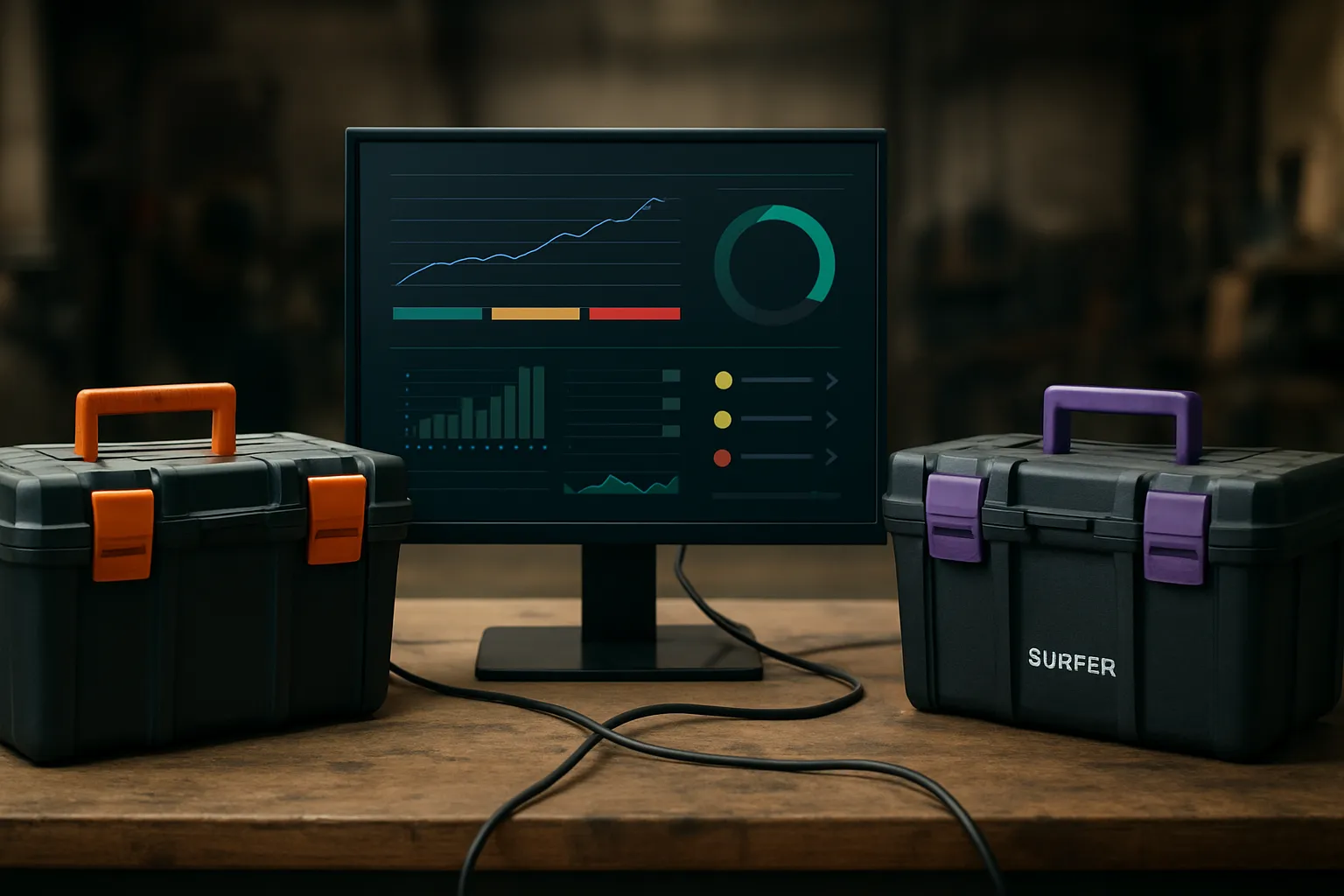
The honest comparison between ChatGPT and a dedicated SEO generator comes down to expertise transfer. ChatGPT requires you to know what good SEO looks like and translate that into prompts. eesel and similar dedicated tools encode that expertise into the product itself. A mid-size SaaS company evaluating these options would typically find that ChatGPT works well for one-off content needs but fails to scale without a dedicated prompt engineer or content strategist managing the process. For consistent, high-volume SEO output, dedicated tools win on efficiency even if they cost more per month.
Generative Engine Optimization (GEO): The Missing Layer in Most AI SEO Strategies
Generative Engine Optimization is the practice of structuring content so it gets cited, quoted, or surfaced by AI platforms like ChatGPT, Perplexity, and Google's AI Overviews. It is distinct from traditional a search engine optimization in that ranking signals matter less than extractability: can an AI model pull a clean, authoritative answer from your content and present it to a user? Most AI writing tools were built before this question became commercially relevant, which is why GEO support remains rare even in 2026.
The tools that have integrated GEO most meaningfully are tracking brand mentions across AI platforms, not just Google positions. According to the Search Influence 2026 AI SEO tracking analysis, platforms with native GEO tracking allow marketers to see when and how their brand appears in AI-generated answers, then adjust content structure to increase that visibility. This closes a measurement gap that traditional rank trackers cannot address: a page can rank on page one of Google and never appear in a single AI-generated response.
Structuring content for GEO extraction requires specific formatting choices. Short, self-contained paragraphs that answer a single question perform better than long narrative sections. Tables, numbered lists, and blockquotes are extracted more frequently than dense prose. FAQ sections with direct answers are particularly effective because they mirror the question-answer format that AI models use when generating responses. These are not new writing principles, but applying them systematically requires either a trained writer or a tool that enforces them automatically.
The content gap most businesses miss is the integration between GEO and publishing automation. Generating a GEO-optimized article is one step. Publishing it on a schedule that maintains consistent topical authority signals is another. Most tools handle one or the other. The platforms that handle both, from keyword discovery through GEO structuring to scheduled publication, represent the actual frontier of hands-free SEO automation in 2026.
Comparing AI SEO Tool Approaches: Which Model Fits Your Business
Before committing to any platform, map your actual workflow constraints. The right tool depends on your publishing volume, internal SEO expertise, and how much you want to automate versus control. The table below compares the main approaches by the criteria that matter most for commercial buyers.
| Tool Category | Monthly Cost Range | GEO Support | Automation Level | Best For |
|---|---|---|---|---|
| General AI Writing Assistant | $20 to $200/month | None (manual prompting) | Low: requires expert input | Flexible drafting, one-off content |
| SEO Data + Optimization Platform | $60 to $100/month | Partial (Google-focused) | Medium: automates research, not writing | Teams with existing writers |
| Guided AI Article Workflow | $39 to $59/month | Yes (AI search included) | Medium: step-by-step with user decisions | Solo marketers, small teams |
| Dedicated SEO Blog Generator | $99/month for 100 posts | Partial | High: generates complete posts | High-volume content operations |
| Fully Automated SEO Pipeline | Varies by plan | Full (Google + AI search) | Full: keyword to published post, hands-free | Businesses wanting zero-touch ranking |
The table reveals a clear pattern: GEO support and automation depth are not evenly distributed across price tiers. Most tools in the $39 to $60 range offer one or the other, not both. Full automation with complete GEO coverage, covering both Google and AI search platforms, is concentrated in purpose-built pipelines rather than general-purpose writing tools. For businesses whose goal is ranking without ongoing manual effort, the choice narrows quickly.
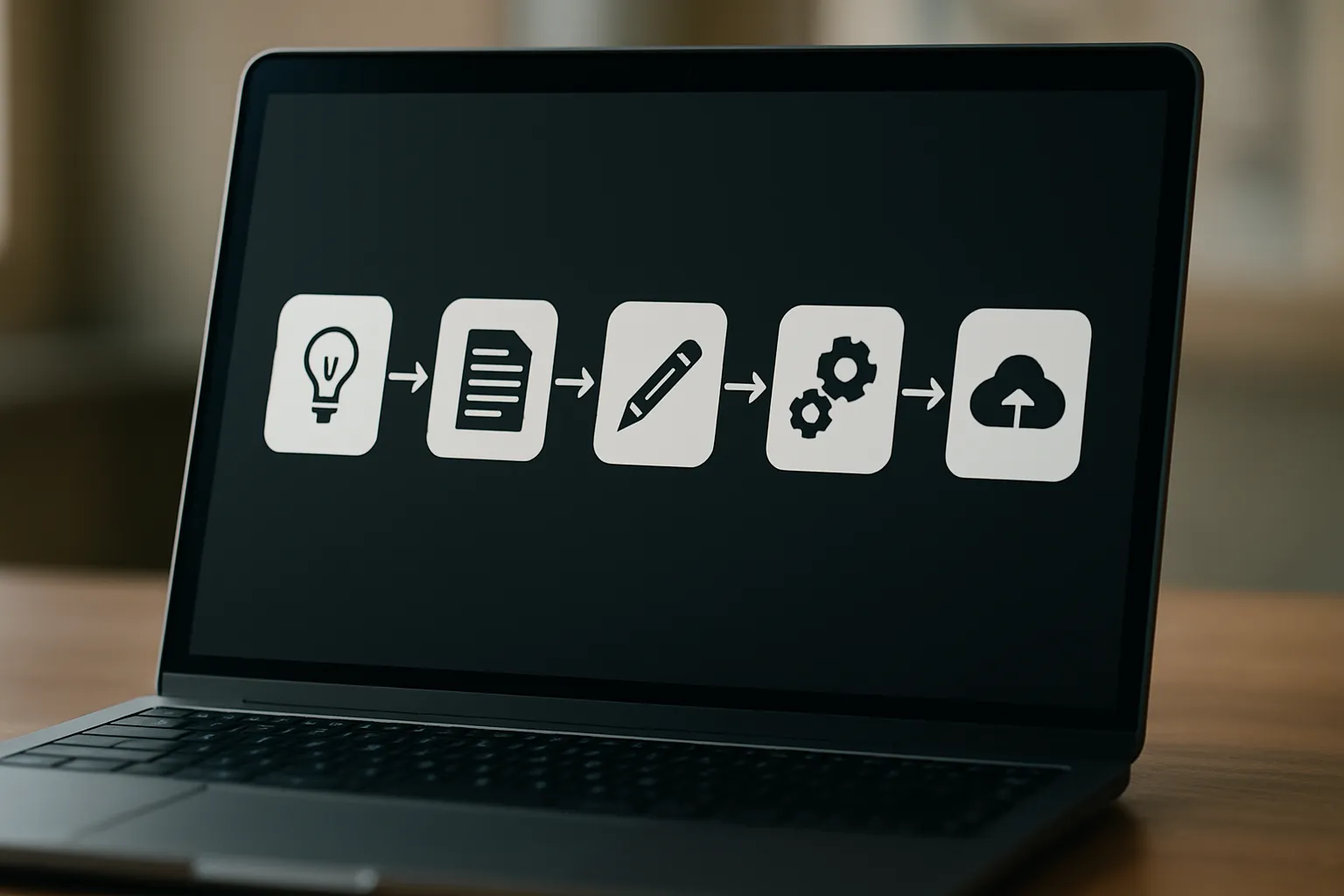
In our experience, businesses that prioritize automation depth over feature breadth see faster compounding results. A team publishing 12 GEO-optimized articles per month on a consistent schedule outperforms a team publishing 3 highly polished articles with manual keyword research, simply because topical authority builds through volume and consistency. The tools that enable that volume without proportional staff time are the ones worth the premium. According to Trysight's content generation tools for SEO analysis, the shift toward automated pipelines is accelerating as AI search captures a larger share of organic discovery traffic.
Our Verdict: The Best AI SEO Tool Depends on Your Automation Threshold
If you have an in-house SEO team and need data-driven briefs, the Semrush Content Toolkit at $60/month delivers strong ROI. If you want a guided workflow with GEO support at a lower entry point, the $39/month Writesonic Starter plan is the most complete option in its price range. For marketing teams needing multi-format copy consistency, Jasper Pro at $59/month per seat earns its cost. For raw volume, eesel AI's 100 posts for $99/month is hard to beat on a per-article basis.
But here is the honest assessment: none of those tools fully close the loop from keyword discovery to scheduled, published, GEO-optimized content without ongoing user decisions. They reduce effort; they do not eliminate it. For businesses that want a genuine hands-free pipeline, where a search engine optimization strategy runs on autopilot across both Google and AI search, the answer is a purpose-built automation platform. Get Your Brand Mentioned by ChatGPT and every other AI search engine without managing the process yourself.
Frequently Asked Questions About a Search Engine Optimization
What is the best AI content generator for SEO in 2026?
The best AI content generator for a search engine optimization in 2026 depends on your automation needs. For guided workflows with GEO support, Writesonic at $39/month is the strongest value. For fully automated keyword-to-published-post pipelines covering both Google and AI search, purpose-built automation platforms outperform all general-purpose writing tools.
How does Writesonic GEO work for AI search optimization?
Writesonic's GEO layer structures content for extraction by AI platforms like ChatGPT and Perplexity, not just Google. It formats articles with self-contained paragraphs, FAQ sections, and direct answers that AI models can cite in generated responses. This increases brand visibility in AI-driven search results, which now account for a growing share of organic discovery traffic.
Which AI tool generates complete SEO blog posts?
eesel AI generates complete, publish-ready SEO blog posts at $99/month for 100 articles after a free trial, according to Eesel.ai (2026). This makes it the highest-volume dedicated blog generator at a fixed monthly cost, producing roughly 3 to 4 articles per day with supporting assets included.
What is Generative Engine Optimization (GEO)?
Generative Engine Optimization (GEO) is the practice of structuring content so AI platforms like ChatGPT, Perplexity, and Google AI Overviews can extract and cite it in generated answers. Unlike traditional a search engine optimization, which targets Google ranking positions, GEO targets visibility within AI-generated responses, which increasingly bypass traditional search result pages entirely.
How much do AI content creation tools cost in 2026?
AI content creation tools range from $20/month for ChatGPT Plus to $200/month for ChatGPT Pro, with dedicated SEO platforms like Semrush Content Toolkit at $60/month, Writesonic at $39/month, Jasper Pro at $59/month per seat, and eesel AI at $99/month for 100 posts (Semrush and Eesel.ai, 2026). Fully automated SEO pipelines vary by plan but typically deliver the lowest cost per published article at scale.
Summary
- Automation depth is the key differentiator: Tools range from $20/month general assistants requiring expert input to fully automated pipelines that handle keyword research, GEO-optimized writing, and scheduled publishing without manual decisions.
- GEO support is still rare at lower price points: Most tools under $60/month optimize for Google only. Writesonic at $39/month is the notable exception, with explicit AI search visibility features built into its workflow.
- Per-article cost beats monthly fee as the primary metric: eesel AI at $0.99 per article and fully automated platforms offer the strongest economics for businesses publishing at consistent volume, far outperforming agency rates of $400 to $600/month for equivalent output.
Conclusion
The landscape for a search engine optimization content tools in 2026 is genuinely diverse, but the decision framework is simple: match your tool to your automation threshold. If you have SEO expertise and need to move faster, data platforms like Semrush and Surfer deliver. If you want guided workflows with GEO coverage, Writesonic and Jasper fit the bill. If you want volume without proportional effort, eesel AI and dedicated generators make economic sense. And if your goal is a completely hands-free pipeline that finds keywords, writes GEO-optimized articles, and publishes them on schedule to rank on both Google and AI search, the only honest answer is a purpose-built automation platform designed for exactly that outcome.